)
BATTERAY X-ray Sorting Technology: Advancing Battery Recycling Across the Globe
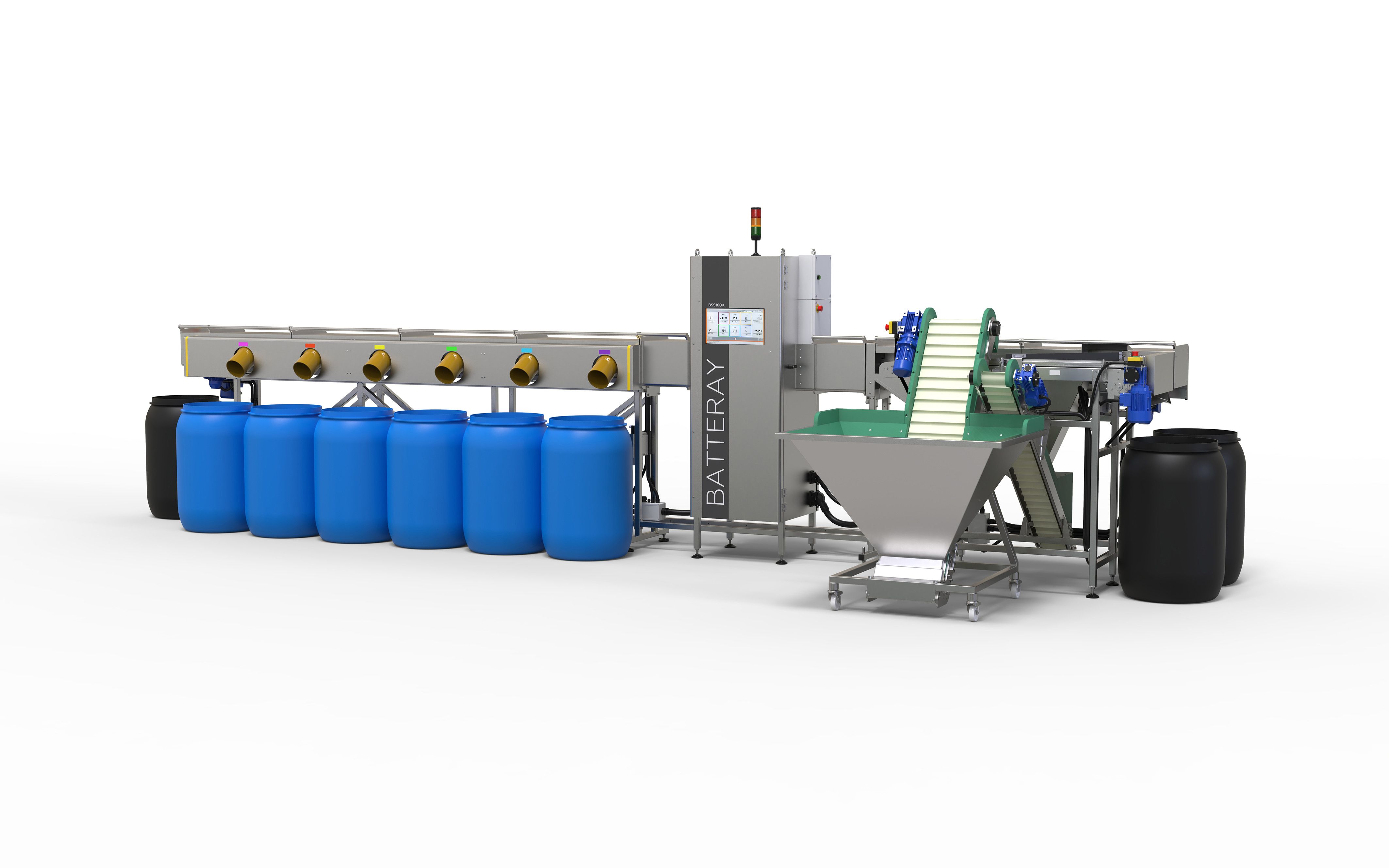
As battery consumption continues to rise, so does the challenge of properly recycling spent batteries. Portable batteries contain hazardous substances, such as mercury, cadmium, and lead, which can pose significant risks to the environment if not properly managed. In addition, as the range of battery chemistries continues to grow, sorting them accurately has become increasingly complex. In response to these challenges, BATTERAY has been deployed across multiple regions, including Canada, Europe, and Australia. This AI-powered X-ray sorting system is designed to address the issue of accurate battery identification and classification, ensuring that valuable materials are recovered efficiently and safely, while minimizing environmental harm.
How BATTERAY Works
BATTERAY leverages X-ray technology to scan the internal structure of each battery as it moves along the conveyor. Unlike traditional optical systems that rely on surface characteristics or labels, BATTERAY uses X-rays to "see through" the battery and identify its internal chemistry. This ensures that batteries are accurately sorted by type, regardless of missing labels, counterfeit markings, or surface damage. The system combines AI algorithms with X-ray imaging to analyze the internal composition of the battery, including materials such as electrodes, electrolytes, and casing. The AI-driven system then categorizes the battery based on its chemical composition, sorting it into the appropriate group, such as Li-ion, NiCd, Alkaline, or NiMH. This technology eliminates the risks associated with traditional sorting methods, which often rely on human judgment or optical recognition systems that cannot reliably identify damaged, counterfeit, or unmarked batteries.
Global Adoption of BATTERAY
Since its introduction, BATTERAY has been successfully deployed across regions in Canada, Europe, and Australia, helping recycling facilities improve their sorting processes and meet stricter regulatory standards. In Canada, where battery recycling has become an urgent environmental priority, BATTERAY’s ability to accurately classify a wide range of battery chemistries has been instrumental in reducing contamination and increasing the recovery of valuable materials like lithium, nickel, and cobalt. In Europe, BATTERAY has played a critical role in helping recycling facilities meet the stringent regulations of the Extended Producer Responsibility (EPR) programs, which require manufacturers to fund battery recycling efforts. BATTERAY’s high sorting accuracy, with over 99.5% precision for common battery types, has enabled facilities to meet these strict standards while reducing operational costs and improving efficiency. In Australia, BATTERAY has been successfully implemented in several recycling plants, where it has helped address the growing challenge of processing a diverse range of battery chemistries, including those used in electric vehicles. The system has enabled Australian recycling facilities to process these batteries more efficiently and safely, significantly improving their throughput and material recovery rates.
The Advantages of X-ray Sorting Technology
- High Accuracy: BATTERAY achieves sorting accuracy of over 99.5% for Alkaline and ZnC batteries, and more than 95% for lithium-based and nickel-based batteries, reducing contamination and ensuring high-quality material recovery.
- Non-Destructive: The X-ray process is non-invasive, meaning that batteries remain intact throughout the sorting process, preserving valuable materials for future recycling.
- High Throughput: With a throughput capacity of 350 kg/hour, BATTERAY can handle large volumes of batteries efficiently, making it suitable for high-demand operations in large-scale recycling facilities.
- Safety: By automating the sorting process, BATTERAY eliminates the need for manual handling, reducing the risk of exposure to hazardous materials and mitigating the risks of accidents, such as fires or explosions, that can occur during battery processing.
- Adaptability: BATTERAY can be customized to handle a wide variety of battery types, and its AI system continuously learns and adapts to new battery technologies and chemistries.
- Environmental and Economic Impact: The environmental benefits of BATTERAY are substantial. By improving the accuracy of sorting, the system ensures that valuable materials like lithium, nickel, and cobalt are recovered and reused, reducing the need for mining these rare and expensive resources. This contributes to a circular economy by conserving natural resources and lowering carbon emissions associated with battery manufacturing. Economically, BATTERAY offers recycling facilities the potential to reduce operational costs. The automation of the sorting process reduces the need for manual labor, while the high sorting purity leads to better recovery rates and more efficient use of resources. This makes BATTERAY a cost-effective solution for battery recyclers, enabling them to process more batteries in less time and with greater accuracy.
Conclusion
BATTERAY is transforming the way batteries are recycled. By combining X-ray imaging and AI-based sorting algorithms, this innovative technology offers a safer, more efficient, and environmentally responsible solution to the growing challenges of battery waste management. Deployed in Canada, Europe, and Australia, BATTERAY is already making a significant impact, helping recycling facilities improve their sorting accuracy, reduce operational costs, and contribute to a more sustainable future. As the global battery market continues to grow, BATTERAY is poised to remain at the forefront of the recycling industry, providing a crucial tool for sustainable battery management and resource recovery.
Meet the LINEV SYSTEM team at Stand C85 or visit their website for more information.
About
Join us on 17–18 June 2026 at Messe Frankfurt, Germany, for the industry’s most influential gathering of recycling companies, critical raw material suppliers, electronics and battery manufacturers, and ITAD specialists. This free-to-attend exhibition and conference grants you the unique opportunity to gain access to 4 co-located shows: E-Waste World Expo, Battery Recycling Expo, Metal Recycling Expo, and ITAD & Circular Electronics Expo.
The information within the copy was supplied by Dr. Anthinies Joseph, LINEV Systems.
)