)
Japan's Leader for state-of-the-art cable & stainless steel recycling
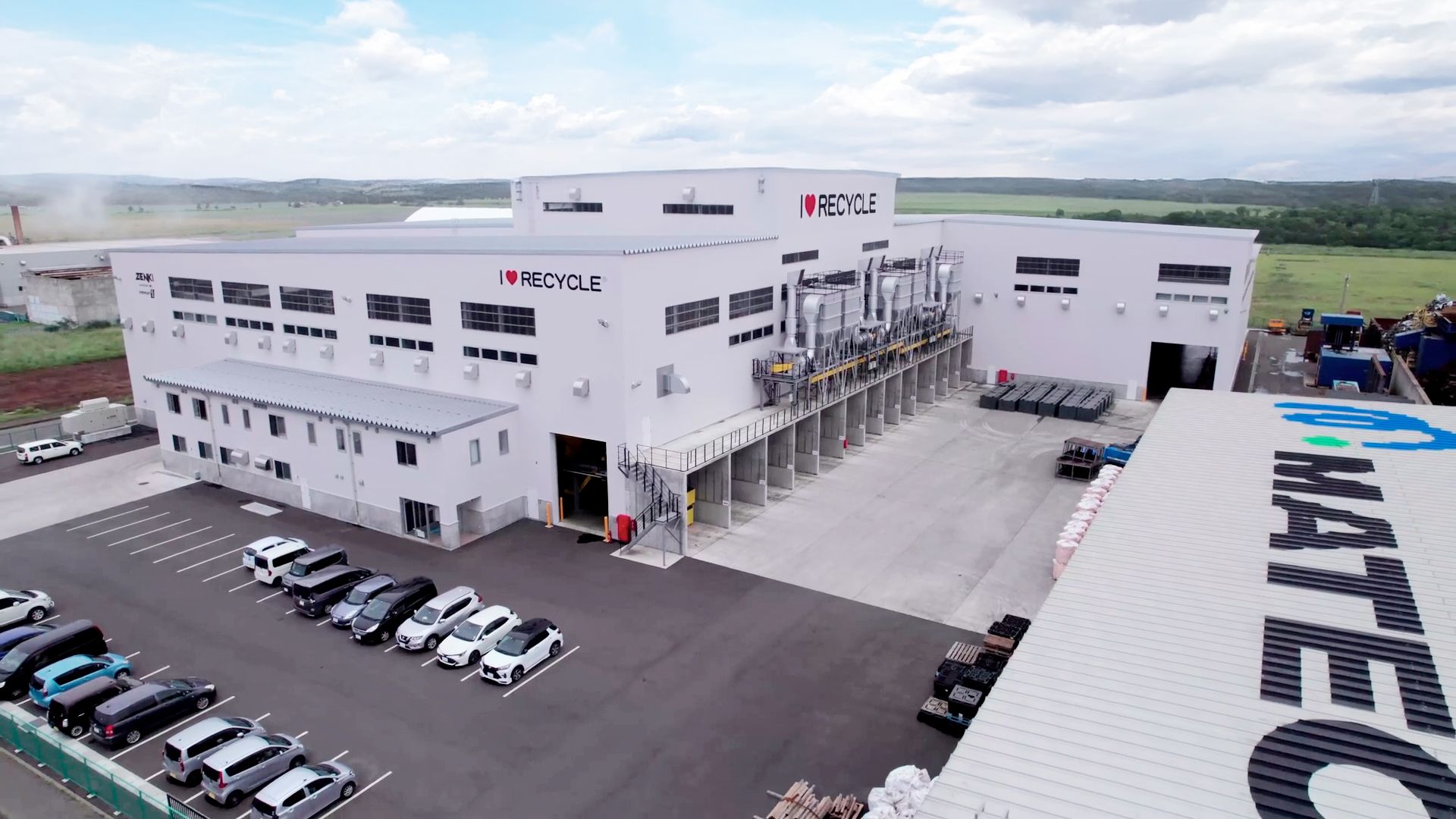
Metal recovery at the highest level The new ASR plant from MATEC collects and refines shredder light fractions (SLF) and Zorba materials from a total of six other MATEC plants. It consists of two separate sorting lines that are geared towards different material streams and target metals. While one line concentrates stainless steel and heavy metals, the second line is focused on separating metals from a light fraction. Even the smallest particles of less than 6 mm are processed and fed into the recycling process.
The plant in Tomakomai utilizes a total of 10 STEINERT sensor sorting systems, 6 non-ferrous metal separators, and 2 electromagnets. Precise sorting for stainless steel and copper The primary objective of the plant is the recovery of stainless steel and cable materials (copper) from the shredder residue. The heavy fraction line processes the material in various grain sizes and passes it through several sorting steps. The plant utilizes advanced separation technology, including non-ferrous separators, upstream magnetic separators, STEINERT ISS induction sorting systems and STEINERT KSS CLI high-tech systems with a sensor combination of induction, 3D and color detection.
These systems are used in succession to ensure efficient separation in the 30-60 mm and 60-120 mm size ranges. For fractions of 6-30 mm, the focus is on copper extraction. STEINERT ISS and KSS CLI systems are used to efficiently isolate the cable fraction. The fines below 6 mm undergo a separate sorting process in which metals, particularly Zorba, are specifically separated. Efficient processing of shredder light fractions The system is also reliant on technological precision when processing SLF. Fraction sizes below 25 mm and above 25 mm each pass through non-ferrous separators and induction sorters, which reject all metals. These metal concentrates are then processed in a downstream system with X-ray transmission (XRT). The remaining fractions, consisting of plastic, rubber and similar materials, are used as fuel for the local cement industry and thus contribute to resource-conserving recycling. Focus on sustainability and technological innovation
The ASR plant in Tomakomai is a prime example of how technological innovation and sustainability can be seamlessly integrated. The advanced sorting solutions provided by STEINERT ensure the efficient recovery of valuable metals from shredder residues, while the remaining fractions are utilized as fuel or raw materials. This remarkable feat of the circular economy not only conserves natural resources but also significantly reduces the industry's carbon footprint.
Meet STEINERT's team at Stand F120 or visit their website for more information.
About
Join us on 17–18 June 2026 at Messe Frankfurt, Germany, for the industry’s most influential gathering of recycling companies, critical raw material suppliers, electronics and battery manufacturers, and ITAD specialists. This free-to-attend exhibition and conference grants you the unique opportunity to gain access to 4 co-located shows: E-Waste World Expo, Battery Recycling Expo, Metal Recycling Expo, and ITAD & Circular Electronics Expo.
The information within the copy was supplied by STEINERT.
)